分享兴趣,传播快乐,
增长见闻,留下美好。
亲爱的您,这里是LearingYard学苑!
今天小编为您带来文章
“喆学(203):精读博士论文
《软件平台系统的治理策略与第三方开发商的接入决策研究》
软件平台对第三方开发商的最优定价策略(2)”
欢迎您的访问!
Share interest, spread happiness,
increase knowledge, and leave beautiful.
Dear, this is the LearingYard Academy!
Today, the editor brings the
“Zhexue (203): Intensive reading of doctoral thesis
“Research on the Governance Strategy of Software Platform Systems
and the Access Decisions of Third-Party Developers”
The optimal pricing strategy for third-party
developers by software platforms (2)”
Welcome to visit!
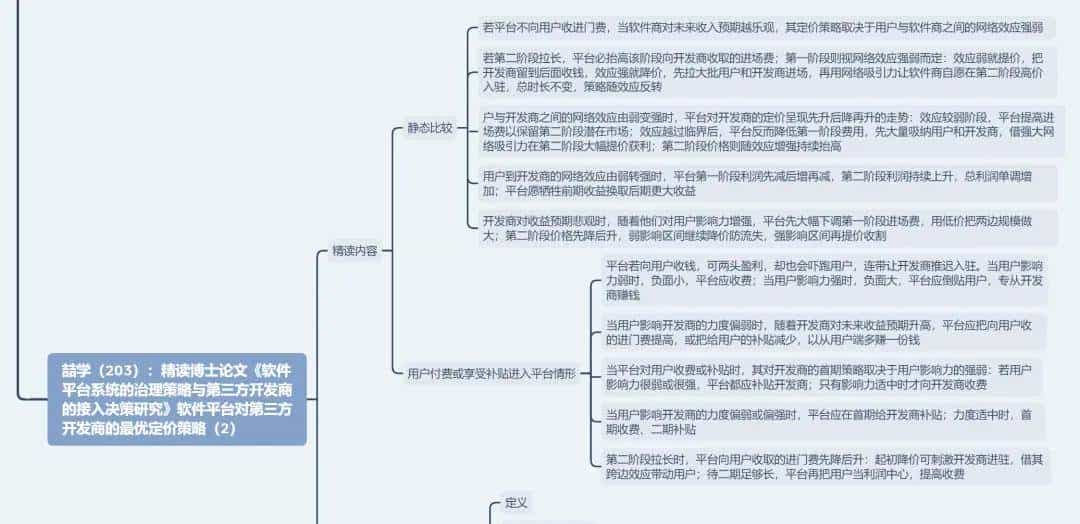
本期推文将从思维导图、精读内容、知识补充三个方面介绍精读博士论文《软件平台系统的治理策略与第三方开发商的接入决策研究》软件平台对第三方开发商的最优定价策略。
This post will introduce the optimal pricing strategy of a software platform for third-party developers from the doctoral dissertation “Research on Governance Strategies of Software Platform Systems and Access Decisions of Third-Party Developers” from three aspects: mind map, in-depth reading content, and knowledge supplement.
一、思维导图(Mind Maps)
二、精读内容(Intensive reading content)
1.静态比较(Static Comparison)
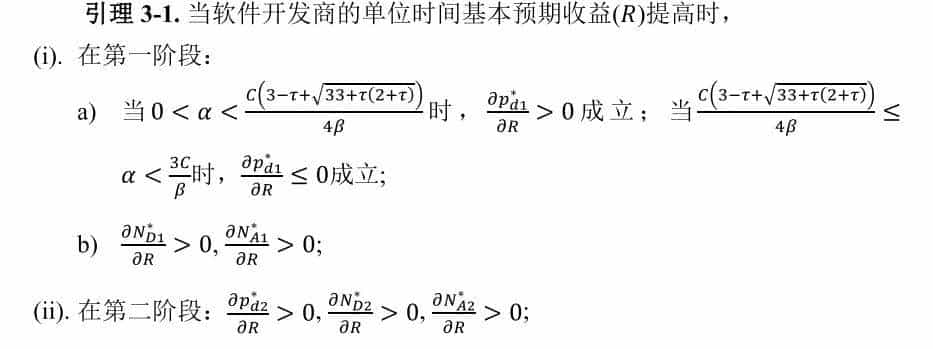
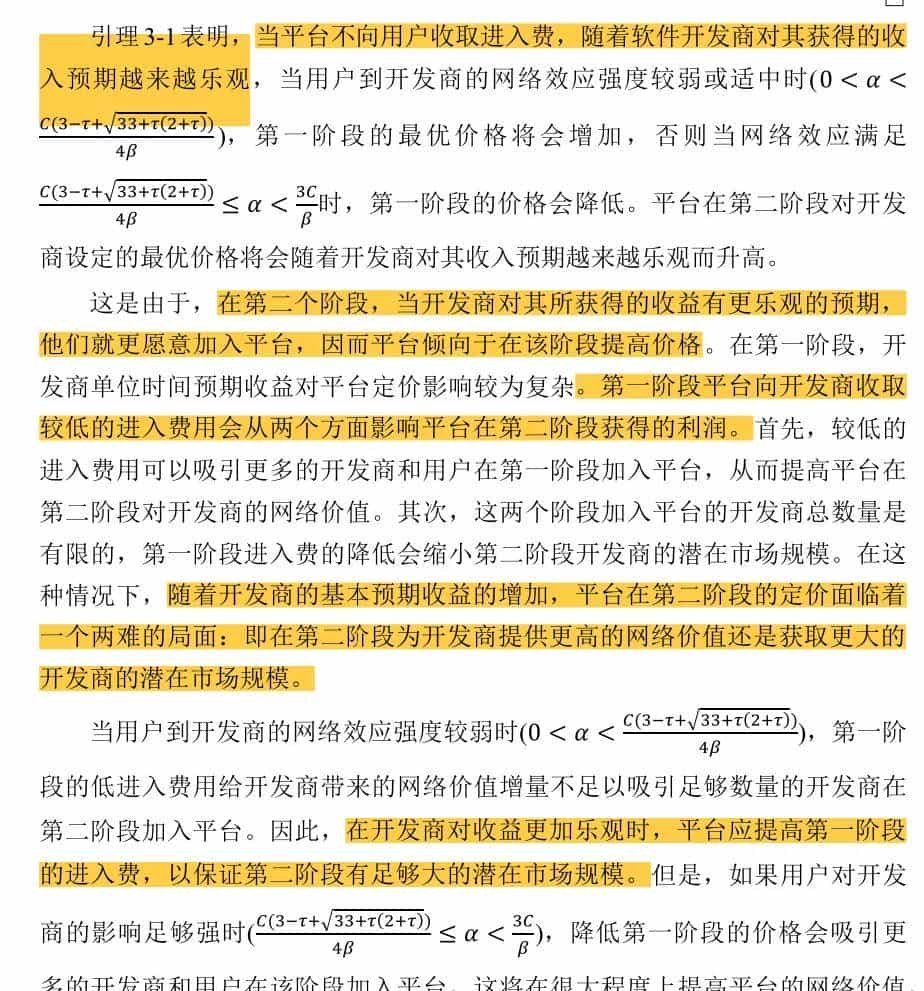
引理指出,若平台不向用户收进门费,当软件商对未来收入预期越乐观,其定价策略取决于用户与软件商之间的网络效应强弱。若效应较弱,平台应在第一阶段提高向软件商收取的进场费,以保住第二阶段的市场空间;若效应较强,平台反而应降低第一阶段费用甚至给予补贴,先吸引更多软件商和用户进驻,迅速做大网络价值,从而在第二阶段对软件商收取更高费用并获取更大利润。整体而言,软件商收入预期上升总会带动平台第二阶段提价,并使平台总利润增加;第一阶段则需在“扩大网络”与“保留市场”之间权衡,网络效应强度决定最终取舍。
The lemma states that if a platform does not charge users an entry fee, the more optimistic a software vendor's future revenue expectations are, the more their pricing strategy will depend on the strength of the network effect between users and the software vendor. If the effect is weak, the platform should increase the entry fee charged to software vendors in the first stage to secure market share in the second stage; if the effect is strong, the platform should instead reduce the first-stage fee or even provide subsidies to attract more software vendors and users, rapidly expanding network value, thereby enabling it to charge higher fees to software vendors and obtain greater profits in the second stage. Overall, increased revenue expectations for software vendors will always lead to price increases on the platform in the second stage, increasing the platform's total profit; in the first stage, a trade-off must be struck between “expanding the network” and “preserving the market,” with the strength of the network effect determining the final choice.
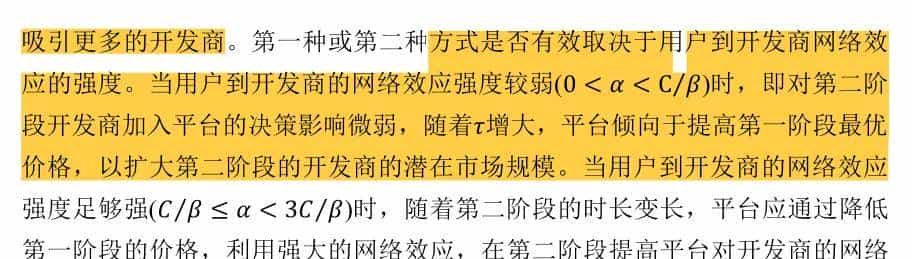
引理说,若第二阶段拉长,平台必抬高该阶段向开发商收取的进场费;第一阶段则视网络效应强弱而定:效应弱就提价,把开发商留到后面收钱,效应强就降价,先拉大批用户和开发商进场,再用网络吸引力让软件商自愿在第二阶段高价入驻,总时长不变,策略随效应反转。
The lemma states that if the second phase is prolonged, the platform must raise the entry fee charged to developers in that phase; the first phase depends on the strength of the network effect: if the effect is weak, the price is raised to keep developers until later to collect money; if the effect is strong, the price is lowered to attract a large number of users and developers first, and then the network attraction is used to make software vendors voluntarily enter at a higher price in the second phase. The total duration remains the same, and the strategy is reversed according to the effect.


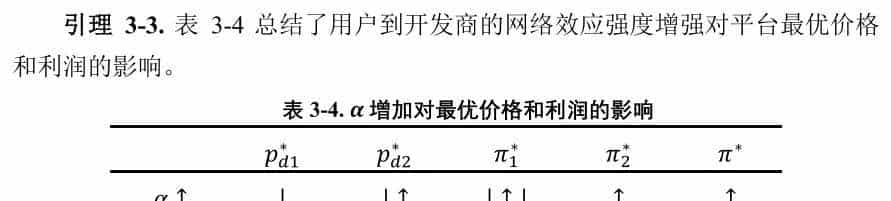
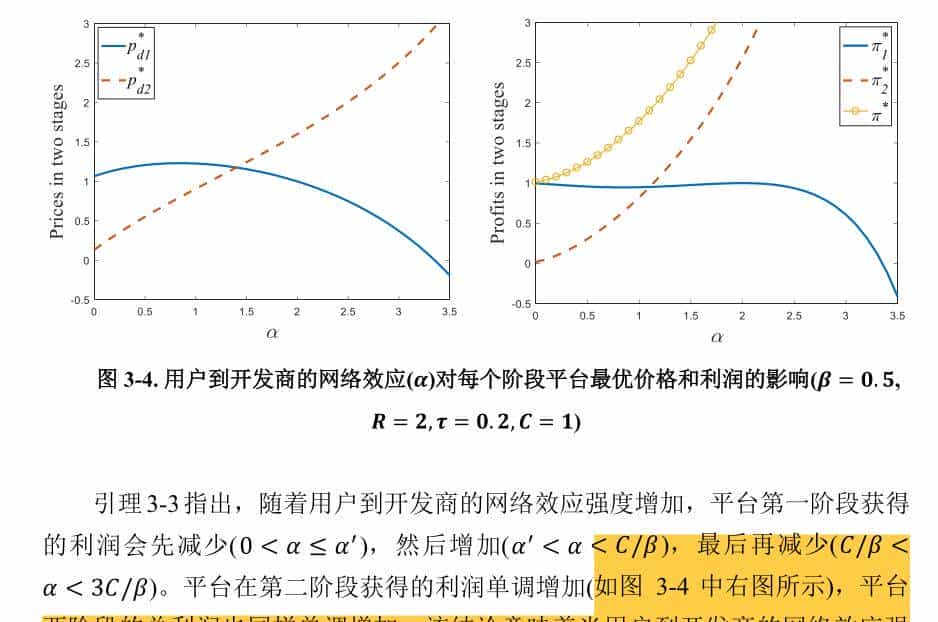
引理指出,用户与开发商之间的网络效应由弱变强时,平台对开发商的定价呈现先升后降再升的走势:效应较弱阶段,平台提高进场费以保留第二阶段潜在市场;效应越过临界后,平台反而降低第一阶段费用,先大量吸纳用户和开发商,借强劲网络吸引力在第二阶段大幅提价获利;第二阶段价格则随效应增强持续抬高。
The lemma states that when the network effect between users and developers strengthens, the platform's pricing for developers exhibits a pattern of first rising, then falling, and then rising again: In the weaker phase, the platform increases entry fees to retain potential market share in the second phase; once the effect crosses a critical threshold, the platform reduces first-phase fees to attract a large number of users and developers, leveraging the strong network attraction to significantly increase prices in the second phase for profit; the second-phase price continues to rise as the effect strengthens.
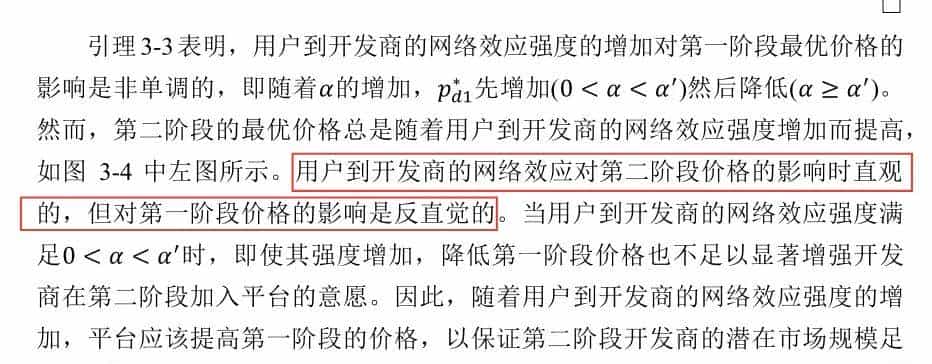

图显示,用户到开发商的网络效应由弱转强时,平台第一阶段利润先减后增再减,第二阶段利润持续上升,总利润单调增加;平台愿牺牲前期收益换取后期更大收益。
The diagram shows that when the network effect from users to developers strengthens, the platform's first-phase profit first decreases, then increases, then decreases again, while the second-phase profit continues to rise, resulting in a monotonic increase in total profit; the platform is willing to sacrifice early-stage revenue for greater later-stage revenue.
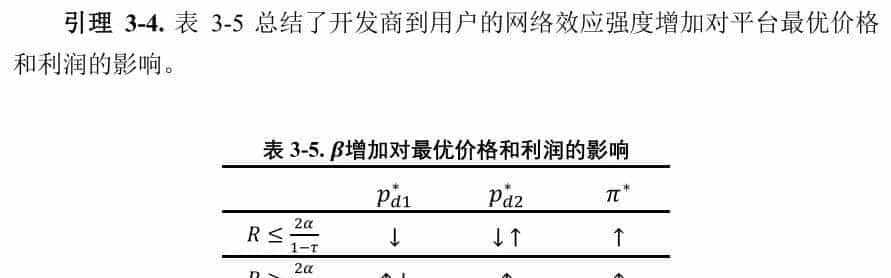
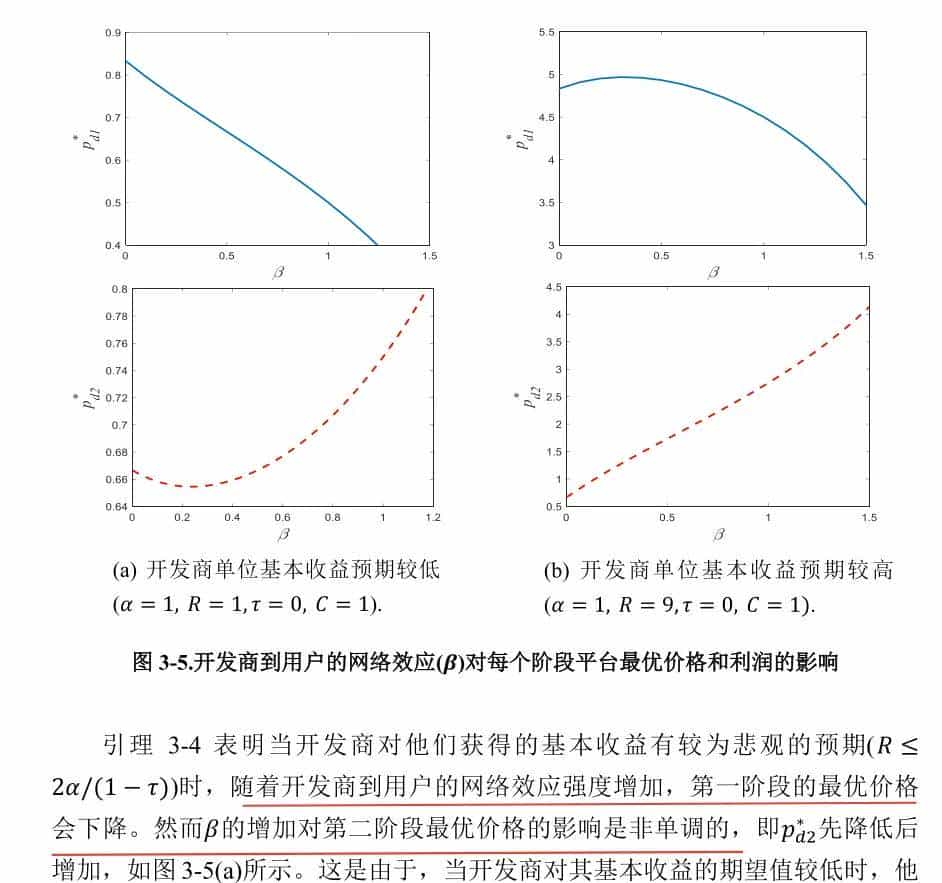
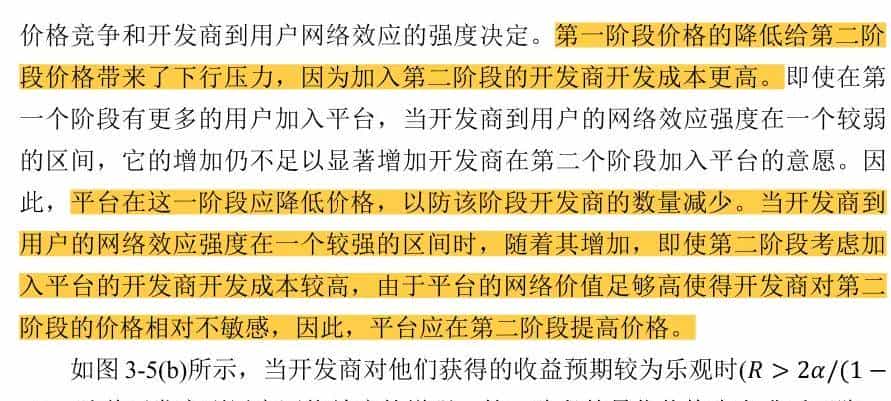
引理说,开发商对收益预期悲观时,随着他们对用户影响力增强,平台先大幅下调第一阶段进场费,用低价把两边规模做大;第二阶段价格先降后升,弱影响区间继续降价防流失,强影响区间再提价收割。若开发商预期乐观,第一阶段价格先升后降,第二阶段则持续抬高。两阶段利润走势随预期高低分化,平台借网络效应强度灵活调节收费节奏。
The lemma states that when developers are pessimistic about revenue expectations, as their influence on users increases, the platform first significantly lowers first-phase entry fees to expand the scale on both sides with low prices; the second-phase price first decreases and then rises, continuing to lower prices in the weak-influence range to prevent churn, and then raising prices again in the strong-influence range to reap profits. If developers are optimistic, the first-phase price first rises and then falls, while the second-phase price continues to rise. The profit trends in the two phases diverged depending on whether expectations were high or low, and the platform flexibly adjusted the charging pace by leveraging the strength of the network effect.
2.用户付费或享受补贴进入平台情形(User Payment or Subsidized Entry Scenarios)
平台若向用户收钱,可两头盈利,却也会吓跑用户,连带让开发商推迟入驻。当用户影响力弱时,负面小,平台应收费;当用户影响力强时,负面大,平台应倒贴用户,专从开发商赚钱。
If the platform charges users, it can profit from both ends, but this can also scare away users and cause developers to postpone their entry. When user influence is weak, the negative impact is small, and the platform should charge users; when user influence is strong, the negative impact is large, and the platform should subsidize users to profit solely from developers.
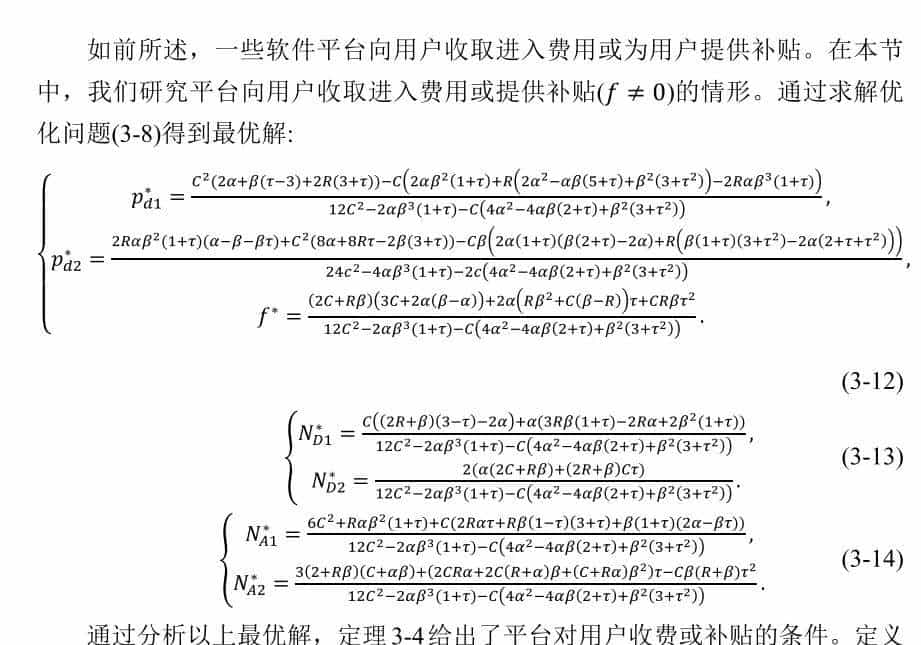
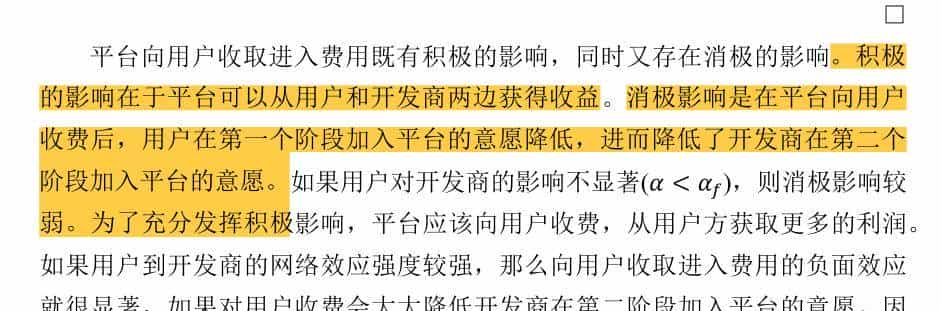
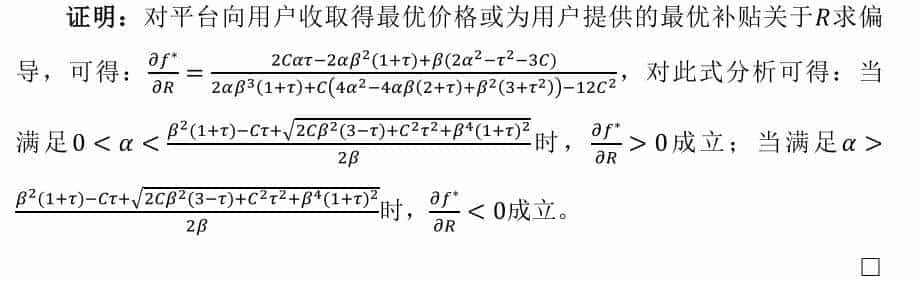
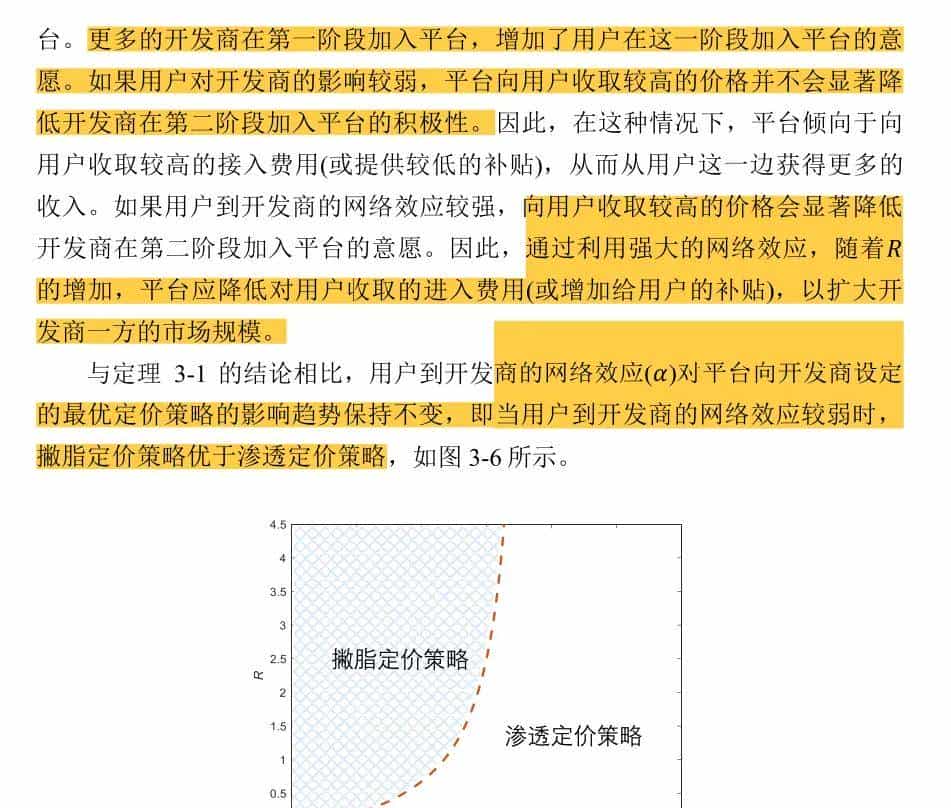
定理表明,当用户影响开发商的力度偏弱时,随着开发商对未来收益预期升高,平台应把向用户收的进门费提高,或把给用户的补贴减少,以从用户端多赚一份钱;由于用户影响力小,收费高也不会明显打击开发商第二阶段入驻的热烈。反之,若用户影响力强,再向用户收高价就会显著压低开发商后续进入意愿,此时平台应降低用户费用或加大补贴,借旺盛的网络吸引力先把用户规模做大,从而反向带动开发商数量和市场总收益。与前面结论一致,用户影响力弱,平台对开发商宜采用撇脂高价策略;用户影响力强,则渗透低价策略更优。
The theorem states that when users' influence on developers is relatively weak, as developers' expectations of future revenue increase, the platform should raise the entry fee charged to users or reduce subsidies to users to earn more from them. Because user influence is small, high fees will not significantly dampen developers' enthusiasm for entering the platform in the second phase. Conversely, if user influence is strong, charging users high prices will significantly reduce developers' willingness to enter later. In this case, the platform should lower user fees or increase subsidies, leveraging the strong network appeal to first expand the user base, thereby indirectly driving the number of developers and total market revenue. Consistent with the previous conclusion, when user influence is weak, the platform should adopt a skimming high-price strategy for developers; when user influence is strong, a penetration low-price strategy is more effective.

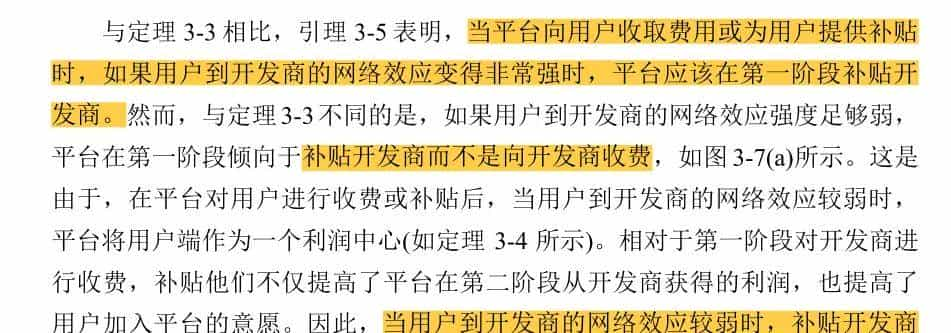
引理指出,当平台对用户收费或补贴时,其对开发商的首期策略取决于用户影响力的强弱:若用户影响力很弱或很强,平台都应补贴开发商;只有影响力适中时才向开发商收费。弱影响时,平台主要靠用户端赚钱,先补贴开发商可迅速做大用户规模,既提升二期开发商缴费意愿,也增加用户进场热烈,整体利润更高。强影响时,补贴则能充分利用网络效应,为二期高价收费铺路。这一结论与此前仅思考开发商端收费时的策略不同,弱影响区间由“收费”转为“补贴”,体现平台在双边定价中的灵活权衡。
The lemma states that when a platform charges or subsidizes users, its initial strategy towards developers depends on the strength of the user's influence: if the user's influence is very weak or very strong, the platform should subsidize the developer; only when the influence is moderate should the platform charge the developer. With weak influence, the platform primarily earns money from users; subsidizing developers first can quickly expand the user base, increasing both the developer's willingness to pay in the second phase and user enthusiasm, resulting in higher overall profits. With strong influence, subsidies can fully utilize network effects, paving the way for higher prices in the second phase. This conclusion differs from the previous strategy that only considered charging developers; the weak influence range shifts from “charging” to “subsidizing,” reflecting the platform's flexible trade-offs in bilateral pricing.

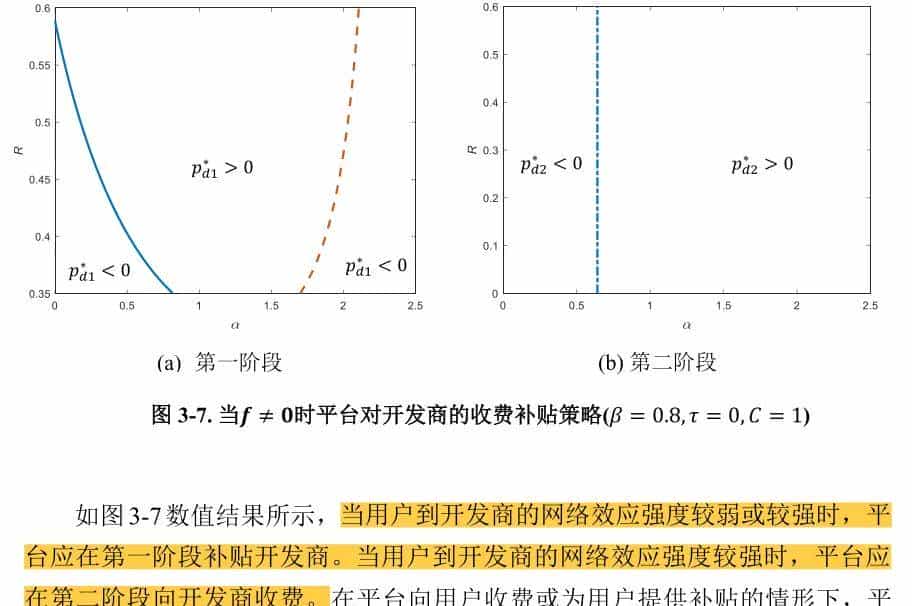
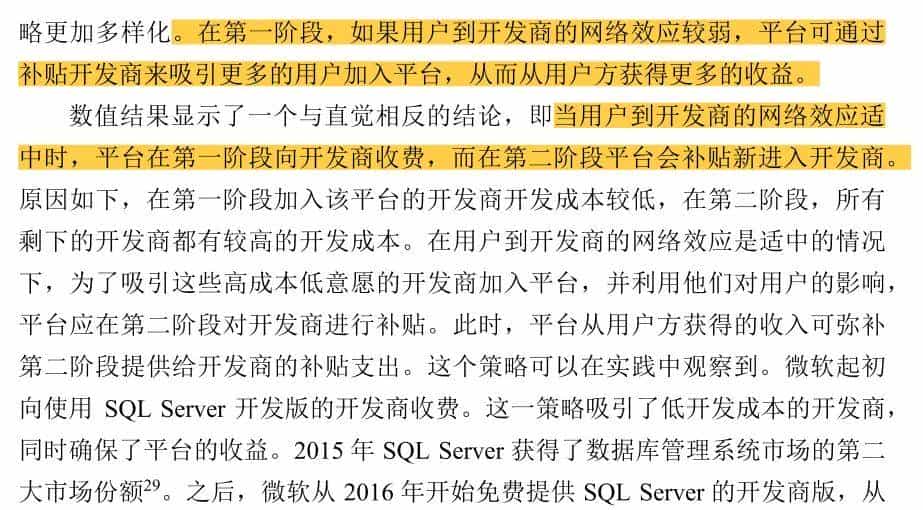
图与算例显示,当用户影响开发商的力度偏弱或偏强时,平台应在首期给开发商补贴;力度适中时,首期收费、二期补贴。弱影响时,补贴可快速拉来大量用户,平台从用户端收钱补缺口。适中时,首期开发商成本低,宜先收费锁定利润;二期剩余开发商成本高、意愿低,平台用补贴吸引他们入驻,再借其对用户的吸引力把用户做大,用户收入可覆盖补贴。微软SQLServer先收开发版费用占市场,后免费发放开发者版,吸引高成本开发商与更多用户,即此策略实例。
The graph and examples show that when the user's influence on the developer is relatively weak or strong, the platform should subsidize the developer in the first phase; with moderate influence, the platform charges in the first phase and subsidizes in the second. With weak influence, subsidies can quickly attract a large number of users, and the platform can fill the gap by collecting money from users. When the timeframe is moderate, the initial developer costs are low, making it advisable to charge fees upfront to lock in profits. In the second phase, the remaining developers have higher costs and lower willingness to join. The platform attracts them with subsidies, then leverages their user base to grow, with user revenue covering the subsidies. Microsoft SQL Server initially charges for the developer version to capture market share, then distributes the developer version for free to attract high-cost developers and more users—this is an example of this strategy.
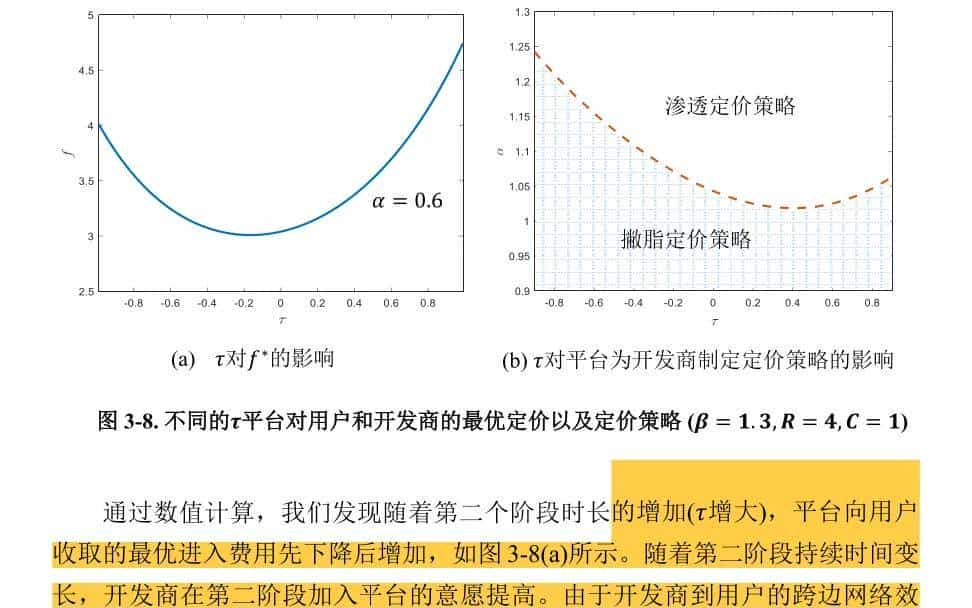
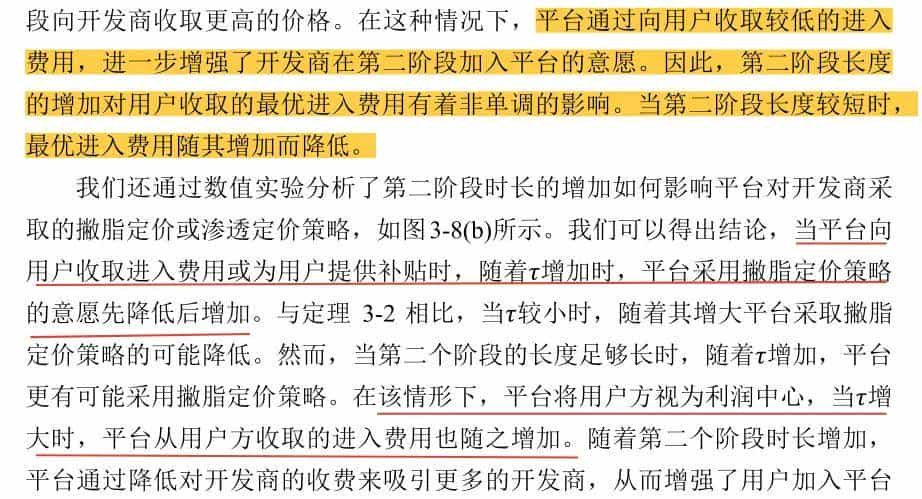
数值实验显示,第二阶段拉长时,平台向用户收取的进门费先降后升:起初降价可刺激开发商进驻,借其跨边效应带动用户;待二期足够长,平台再把用户当利润中心,提高收费。对开发商的定价策略亦呈先渗透后撇脂的反转:二期短时,平台倾向降低开发商费用以快速聚人;二期长时,平台愿牺牲首期开发商收入,用低价吸开发商,再利用旺盛的用户付费能力,二期高价撇脂,提升整体利润。时长变化通过“用户付费意愿”与“开发商成本”两条线,共同决定平台双边价格的非单调走势。
Numerical experiments show that as the second phase lengthens, the platform's entry fee to users initially decreases and then increases: initially, lowering prices incentivizes developers to join, leveraging their cross-side effect to drive user growth; once the second phase is sufficiently long, the platform treats users as profit centers and raises fees. The pricing strategy for developers also exhibits a reversal: in a short second phase, the platform tends to lower developer fees to quickly attract users; in a long second phase, the platform is willing to sacrifice initial developer revenue, attracting developers with low prices, then leveraging strong user payment capabilities to skim profits with high prices in the second phase, increasing overall profits. Changes in duration, through the “user willingness to pay” and “developer costs,” jointly determine the non-monotonic trend of the platform's two-sided prices.
三、知识补充(Knowledge supplement)
跨边网络效应是多边平台中的核心经济机制之一,指一个平台一侧用户数量的变化,会影响另一侧用户的价值、效用或参与意愿。这种效应体现了不同用户群体之间的相互依赖性,是平台能够形成规模优势和市场壁垒的关键来源。跨边网络效应最常出现于拥有至少两类主体的系统,如:买家与卖家、玩家与开发者、内容创作者与观众、广告主与用户等。跨边网络效应的本质是用户间不是直接互动,而是通过平台的“媒介作用”间接产生价值传递。平台的价值不是属于某个单一侧,而是通过不同用户群体之间的交互共同生成的。
Cross-side network effects are a core economic mechanism in multilateral platforms, referring to how changes in the number of users on one side of a platform affect the value, utility, or willingness to participate of users on the other side. This effect reflects the interdependence between different user groups and is a key source of the platform's ability to achieve economies of scale and market barriers. Cross-side network effects most commonly occur in systems with at least two types of entities, such as buyers and sellers, players and developers, content creators and viewers, advertisers and users, etc. The essence of cross-side network effects is that users do not interact directly, but rather value is indirectly transferred through the platform's “medium role.” The platform's value does not belong to any single side, but is jointly generated through the interaction between different user groups.
1.正向跨边网络效应(Positive Cross-Side Network Effects)
正向跨边网络效应指的是:当平台一侧的用户数量增加时,另一侧用户的价值和参与意愿随之上升,从而推动平台整体增长。在典型的市场撮合类平台中,这种效应尤为明显。例如在电商平台上,卖家数量越多,商品选择越丰富、竞争越激烈,从而使买家的购物体验更好,吸引更多买家加入;相应地,当买家规模不断扩大,卖家获得的潜在交易量增加,也就更愿意入驻平台,形成循环强化的增长路径。
Positive cross-side network effects refer to the following: when the number of users on one side of a platform increases, the value and willingness to participate of users on the other side also increase, thereby driving the overall growth of the platform. This effect is particularly pronounced in typical market matching platforms. For example, on e-commerce platforms, the more sellers there are, the richer the product selection, and the more intense the competition, thus improving the shopping experience for buyers and attracting more buyers. Correspondingly, as the buyer base expands, sellers gain more potential transaction volume, making them more willing to join the platform, creating a virtuous cycle of growth.
在支付平台中也是类似的逻辑,更多消费者使用某一支付工具后,商家就更愿意接入该支付方式;商家接入范围扩大,又会进一步鼓励更多消费者使用。游戏平台也体现出同样的机制:玩家规模越大,游戏开发者的潜在市场越广,因此更愿意投入资源开发更多高质量游戏,而游戏数量与质量提升又吸引更多玩家加入。这些正向跨边网络效应常常使平台呈现指数式扩张,并可能最终形成“赢家通吃”的市场格局。
A similar logic exists in payment platforms. As more consumers use a particular payment tool, merchants are more willing to integrate that method; the expansion of merchant integration further encourages more consumers to use it. Gaming platforms exhibit the same mechanism: the larger the player base, the broader the potential market for game developers, thus they are more willing to invest resources in developing more high-quality games, and the increase in the quantity and quality of games attracts even more players. These positive cross-side network effects often lead to exponential platform expansion and may ultimately result in a “winner-takes-all” market structure.
2. 负向跨边网络效应(Negative Cross-Side Network Effects)
负向跨边网络效应则是指平台某一侧用户规模的增加会降低另一侧用户的价值,甚至影响平台的长期可持续性。例如在广告驱动的平台中,广告主数量不断增加可能导致普通用户接触的广告过多,从而降低用户体验,使得用户对平台的使用意愿下降。同样地,在二手交易市场上,如果买家数量快速增长而卖家供给不足,买家面临价格上涨、等待时间延长等问题,整体体验反而变差。负向跨边效应会使平台不得不在商业化与用户体验之间进行平衡,避免某一侧过度膨胀挤压到另一侧的价值空间。如果平台在治理和机制设计上处理不当,这类负向效应可能限制平台规模扩大甚至导致用户流失。
Negative cross-side network effects refer to situations where an increase in the user base on one side of the platform reduces the value of users on the other side, even affecting the platform's long-term sustainability. For example, in ad-driven platforms, an increasing number of advertisers may lead to excessive advertising exposure for ordinary users, thus reducing user experience and decreasing user willingness to use the platform. Similarly, in the secondhand market, if the number of buyers grows rapidly while the supply of sellers is insufficient, buyers face problems such as rising prices and longer waiting times, resulting in a worse overall experience. This negative cross-side effect forces platforms to balance commercialization and user experience, preventing one side from overexpanding and squeezing the value space of the other. If the platform's governance and mechanism design are not handled properly, this negative effect may limit the platform's expansion or even lead to user churn.
电商平台如淘宝或 Shopee 是典型的跨边网络效应场景。在这些平台上,卖家数量的增长提升了商品的种类、品牌竞争和价格透明度,使买家获得更多选择与更好的价格体验;这些因素都提高了买家的效用,吸引更多消费者加入。当买家规模扩大后,卖家可获得的潜在订单量随之上升,使卖家更有动力入驻平台,从而实现卖家与买家之间的双向强化。这种正向循环是电商平台快速扩张的重大动力,也是其能够建立长期竞争壁垒的关键。
E-commerce platforms such as Taobao or Shopee are typical examples of cross-side network effects. On these platforms, the increase in the number of sellers increases the variety of goods, brand competition, and price transparency, giving buyers more choices and a better price experience; these factors all increase buyer utility and attract more consumers. As the buyer base expands, the potential order volume available to sellers increases, making sellers more motivated to join the platform, thus achieving a two-way reinforcement between sellers and buyers. This positive cycle is a key driver of the rapid expansion of e-commerce platforms and a crucial factor in establishing long-term competitive barriers.
在游戏主机与游戏平台生态中,跨边效应同样发挥核心作用。当平台上玩家数量增加时,开发者能够预期更大的收益空间,因此更愿意为该平台开发新游戏或进行优化。随着游戏资源更加丰富、游戏品质提升,玩家又会进一步被吸引加入该平台。主机市场(如 PS 与 Xbox 的竞争)就是这一机制的典型例证:开发者和玩家的双向增长相互促进,协助平台形成规模优势,使得领先者更容易保持长期的市场主导地位。
The cross-side effect also plays a central role in the game console and game platform ecosystem. As the number of players on a platform increases, developers can anticipate greater revenue potential, making them more willing to develop new games or optimize for the platform. With richer game resources and improved game quality, players are further attracted to join the platform. The console market (such as the competition between PS and Xbox) is a prime example of this mechanism: the mutual growth of developers and players mutually reinforces each other, helping platforms achieve economies of scale and making it easier for leaders to maintain long-term market dominance.
内容平台如 YouTube、抖音的运行机制同样依赖跨边网络效应。当创作者数量不断增加时,平台上的内容类型更加丰富,覆盖更广泛的兴趣和人群,从而使观看者获得更高的使用价值;观众规模越大,平台变现能力越强,使广告分成、流量收益等激励机制更有吸引力,因此又吸引更多创作者加入,进一步提升内容供给。这种循环不仅推动平台内容生态繁荣,也使头部平台更容易保持竞争优势。
Content platforms like YouTube and TikTok also rely on cross-side network effects. As the number of creators increases, the platform's content types become richer, covering a wider range of interests and audiences, thus providing viewers with greater value. A larger audience scale strengthens the platform's monetization capabilities, making incentive mechanisms such as advertising revenue sharing and traffic revenue more attractive, thereby attracting even more creators and further increasing content supply. This cycle not only drives the prosperity of the platform's content ecosystem but also makes it easier for leading platforms to maintain their competitive advantage.
今天的分享就到这里了。
如果您对文章有独特的想法,
欢迎给我们留言,让我们相约明天。
祝您今天过得开心快乐!
That's all for today's sharing.
If you have a unique idea about the article,
please leave us a message,
and let us meet tomorrow.
I wish you a nice day!
翻译:谷歌翻译
参考资料:谷歌、Chat GPT
参考文献:苑楠. 软件平台系统的治理策略与第三方开发商的接入决策研究 [D]. 天津大学, 2022.
本文由LearningYard学苑整理发出,如有侵权请在后台留言!
文案|hzy
排版|hzy
审核|yyz
© 版权声明
文章版权归作者所有,未经允许请勿转载。
相关文章





暂无评论...