|
米欧康®全景域监视技术及大区域监控解决方案 |
|
MiuKang® Panoramic Surveillance Technology and Large-Area Monitoring Solutions |
|
|
|
湖州米欧康®电子科技有限公司 |
|
8/7/2025 |
米欧康®全景域监视技术及大区域监控解决方案
一、项目背景与需求分析
1.1 传统监控技术痛点
当前大区域视频监控(如机场、港口、大型广场、地标景点等)面临三大核心挑战:
- 环境限制:夜间、雨雾、逆光等复杂环境下画面模糊,无法满足24小时全时空监控需求;
- 视野与细节矛盾:传统摄像机“看得广则看不清细节,看得清则视野窄”,远处分辨率骤降(超过必定距离后解析度<125像素/米,人眼难以分辨);
- 效率与完整性问题:多设备分片覆盖导致画面碎片化,操作繁琐;PTZ摄像机仅记录当前指向区域,易遗漏其他位置事件,无法满足事后追溯与AI分析需求。
1.2 核心需求
针对机场、港口、边海防、智慧城市等大区域场景,需满足四大核心需求:
全域清晰度:远近区域分辨率均匀,确保远处细节可辨(≥125像素/米,关键区域≥250像素/米);
全时空记录:无死角、无遗漏记录全场景事件,支持事后完整追溯;
高效操作:单界面全局纵览与局部细节;
技术适配性:兼容高清设备与AI分析,支持未来分辨率与功能扩展。
二、米欧康®核心技术方案
2.1 全天候全景域监视技术
- 技术原理:通过创新算法(抗逆光、低照度增强)与定制硬件设计,突破光线与环境限制,实现夜间、雨雾等复杂环境下的清晰成像。
- 核心优势:24小时无死角监控,覆盖范围比同类产品提升30%+,恶劣天气下图像清晰度与稳定性提升50%+。满足“全局掌控+细节洞察”的核心需求,解决“看得广就看不清”的行业难题。
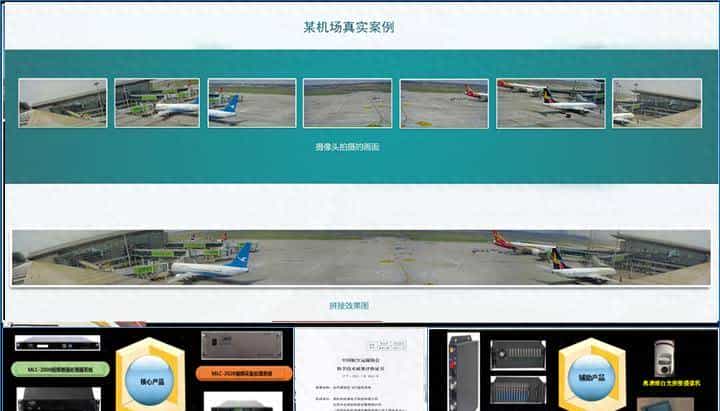
- 实践效果:在某机场、港口应用中,夜间可清晰捕捉航班起降、船只动态及人员轨迹,为走私打击等行动提供关键线索。
2.2 主流全景摄像机系统选型
|
技术类型 |
核心原理 |
优势 |
适用场景 |
局限 |
|
鱼眼镜头全景摄像机 |
超广角鱼眼镜头+畸变矫正算法 |
单设备覆盖小空间无死角,成本低 |
零售店、电梯、小型会议室 |
人脸清晰范围仅半径5米,复杂场景细节不足 |
|
360度全景摄像机 |
球面镜透射+反射,一次性收录全景信息 |
无后期拼接,支持虚拟PTZ(延长设备寿命) |
楼宇大厅、停车场、产品展示 |
不可光学变倍,无法呈现局部细节 |
|
全景PTZ摄像机 |
全景摄像机+高速球联动,点-面智能控制 |
360度视野+20-30倍光学变倍,细节可追溯 |
广场、交通路口、中小型场馆 |
大区域下远处仍存在分辨率衰减 |
|
米欧康®大区域多焦距系统 |
“切片化”设计+多路视频实时拼接 |
全区域均匀分辨率,支持超高清(默认值)20480×12288像素 |
机场、港口、地标景点、超大型广场 |
需专业算法支持拼接,初期部署成本较高 |
2.3 大区域多焦距大视野视频系统(核心方案)
2.3.1 技术原理
- “切片化”设计:将大区域划分为多个局部子区域,每个子区域由对应焦距的高清摄像机覆盖,确保全空间分辨率均匀(≥125像素/米);
- 实时拼接技术:通过坐标空间转换与图像融合算法,对齐多路空间重叠的实时视频流,形成无缝、无死角的大尺度全景视频;
- 分辨率扩展:由高清摄像机组成,分辨率随高清技术升级可无限扩展(目前支持数千万至数亿像素)。
2.3.2 核心优势
相较于传统监控系统,米欧康®全景视频拼接监控系统具有适配复杂场景的全能表现核心优势。系统展现如下显著优势:
- 场景适应性强。无论是光照多变的室外环境,还是设备密集的复杂区域,系统都能通过动态参数调节与算法优化,保持稳定的成像与拼接效果,尤其适用于机场、港口、大型场馆等对监控精度要求极高的场所。
- 从“拼接屏幕”到实时无缝“内容拼接”融合。系统实现“全景画面和动态连续追踪”一体的监控。
- 全局与细节兼顾:既实现超宽视野,又确保远处细节清晰可辨,满足“全局掌控+细节洞察”的核心需求;
- 全时空完整性:24小时连续记录全场景,无信息遗漏,满足事后追溯与AI智能分析(如入侵检测、目标轨迹跟踪);
- 支持全景拼接视频的实时存储和回放功能。存储的视频内容回放,全景拼接视频具有分辨率保存不变特征。
- 扩展灵活可控。系统采用模块化设计,可根据场景需求灵活增减摄像头数量与类型,理论上支持无限扩展至任意规模的大视野监控,且新增设备无需大规模调整现有系统,降低了后期升级成本。
- 采用系统实现实时多视频内容拼接和全视景视频矢量化技术,全景视频超高分辨率,显示结果不变形。系统视频分辨率默认值为20480×12288像素。目前,没有一个显卡或显示器可以在一个视图中显示此数量的像素。
- 高效运维:安装点覆盖数万平方米,减少设备数量60%+,降低布线与维护成本。
2.4 可视化层技术与显示方案
2.4.1 显示设备选型
采用液晶拼接屏+小间距LED屏(替代传统投影),支持35、48等非16:9比例拼接,满足大场景一体化展示需求。
2.4.2 核心技术突破
- 变形矫正:嵌入专用算法解决大屏因比例不符导致的画面拉伸问题,确保全景视频无失真显示;
- 分辨率适配:通过“软件定义硬件”支持视频尺寸与像素灵活调节,低分辨率下快速呈现全局,再放大局部高清细节(支持20480×12288像素超高清视频);
- 多用户协同:支持多用户同时操作,可独立放大不同区域细节,如“指挥中心大屏全局监控+多终端局部追踪”。
三、典型应用场景解决方案
3.1 机场飞行区监控
- 需求:全域无死角覆盖、跑道异物(FOD)检测、航班轨迹追踪、夜间清晰成像;
- 方案:部署大区域多焦距系统+全天候算法,实现24小时全跑道监控(分辨率≥250像素/米),支持AI自动识别FOD与航班起降状态,联动PTZ摄像机追踪细节。
3.2 港口与航道监控
- 需求:恶劣天气(雾、雨)下船只动态监控、集装箱编号识别、走私行为预警;
- 方案:结合全天候全景域技术与多焦距拼接,实现10公里航道一次性成像,雾天可清晰识别1公里外船名与集装箱编号,支持多用户同时追踪多艘船只。
3.3 地标性景点与大型广场
- 需求:超大范围(数平方公里)全局展示、人流密度分析、游客行为追溯;
- 方案:通过“切片化”系统拼接多路1920x1080p视频,输出超高清全景画面(如20480×12288像素),适配巨幕显示,支持游客轨迹回放与异常行为智能预警。
3.4 智慧城市公共区域
- 需求:大型活动(演唱会、马拉松)全域调度、拥挤风险控制、突发事件快速响应;
- 方案:替代传统30+分屏监控,通过单块巨幕实现“一屏总览”,点击画面任意位置即可放大细节(如观众应援灯牌、异常聚集点)和对应中控系统适应性启动。
四、实施计划与流程
4.1 项目实施步骤
- 需求调研与方案设计:结合场景特点(面积、环境、重点区域)定制“切片化”分区与设备参数;
- 设备选型与部署:根据需求配置多焦距摄像机、拼接服务器、显示大屏等硬件,完成安装布线;
- 算法调试与联调:优化视频拼接精度、变形矫正效果、多用户协同响应速度;
- 验收与培训:通过分辨率检测、全场景覆盖测试后交付,提供操作与维护培训。
4.2 核心设备清单
|
设备类型 |
核心参数 |
作用 |
|
米欧康®AI全彩夜视拼接相机 |
夜视全彩0.0001 Lux |
覆盖“切片化”子区域,确保局部高清 |
|
米欧康®视频拼接服务器 |
支持多路视频实时拼接 |
生成无缝全景视频 |
|
显示大屏 |
高刷新率、短响应时间液晶拼接屏/小间距LED屏 |
全景视频可视化展示 |
|
米欧康®记录管理软件 |
视频存储与超高分辨率全景视频回溯 |
全场景事件记录与事后分析 |
五、方案优势与对比
|
对比维度 |
传统方案(高清摄像机+PTZ) |
米欧康®大区域多焦距方案 |
|
分辨率均匀性 |
远处分辨率骤降(<125像素/米) |
全区域均匀(≥125像素/米,关键区域≥250像素/米) |
|
事件完整性 |
易遗漏非PTZ指向区域事件 |
全场景无死角记录,支持多事件并行追溯 |
|
操作效率 |
多画面切换繁琐,单用户操作 |
单界面全局+细节兼顾,支持多用户协同 |
|
维护成本 |
多设备分片部署,成本高 |
单安装点覆盖超大面积,成本降低60%+ |
|
AI适配性 |
画面碎片化,分析精度低 |
完整视频流支持AI目标检测、轨迹追踪 |
六、未来展望
- 技术升级:融合更先进的低照度成像、宽动态处理技术,提升极端环境适应性;
- 智能集成:嵌入深度学习算法,实现自动入侵检测、多目标追踪、异常行为预警等功能;
- 生态兼容:适配VMS(视频管理软件)统一接口,与海康、大华等主流平台无缝对接,支持跨系统协同。
七、总结
米欧康®全景域监视技术及大区域多焦距解决方案,通过“多镜头协同+实时拼接+智能算法”三大核心创新,突破传统监控的“环境限制、视野与细节矛盾、效率与完整性问题”,实现大区域全时空、高清晰、无死角监控。方案已在机场、港口等场景验证效果,可广泛应用于安防、交通、文旅等领域,为智慧城市与公共安全提供一体化技术支撑。
MiuKang® Panoramic Surveillance Technology and Large-Area Monitoring Solutions
I. Project Background and Demand Analysis
1.1 Pain Points of Traditional Surveillance Technology
Current large-area video surveillance (such as airports, ports, large squares, landmark attractions, etc.) faces three core challenges:
- Environmental limitations: Blurred images in complex environments such as nighttime, rain, fog, and backlighting, failing to meet the needs of 24-hour full-time and space surveillance;
- Contradiction between field of view and details: Traditional cameras “see a wide view but cannot capture details clearly, and capture details clearly but have a narrow field of view”. The resolution drops sharply at a distance (beyond a certain distance, the resolution is < 125 pixels/meter, which is indistinguishable to the human eye);
- Efficiency and integrity issues: Fragmented images due to multi-device segmented coverage, leading to cumbersome operations; PTZ cameras only record the area currently pointed to, easily missing events in other locations, and unable to meet the needs of post-event traceability and AI analysis.
1.2 Core Demands
For large-area scenarios such as airports, ports, border and coastal defense, and smart cities, four core demands need to be met:
- Overall clarity: Uniform resolution in both near and far areas, ensuring that distant details are distinguishable (≥ 125 pixels/meter, ≥ 250 pixels/meter in key areas);
- Full-time and space recording: Record all scene events without dead angles or omissions, supporting complete post-event traceability;
- Efficient operation: Overall overview and local details on a single interface;
- Technical adaptability: Compatible with high-definition equipment and AI analysis, supporting future resolution and function expansion.
II. MiuKang® Core Technical Solutions
2.1 All-Weather Panoramic Surveillance Technology
- Technical principle: Through innovative algorithms (anti-backlight, low-light enhancement) and customized hardware design, break through light and environmental limitations to achieve clear imaging in complex environments such as nighttime, rain, and fog.
- Core advantages: 24-hour surveillance without dead angles, 30%+ increase in coverage compared with similar products, and 50%+ improvement in image clarity and stability in severe weather. It meets the core demand of “overall control + detailed insight” and solves the industry problem of “the wider you see, the less clear you get”.
- Practical effects: In the application of a certain airport and port, it can clearly capture flight takeoffs and landings, ship dynamics, and personnel trajectories at night, providing key clues for anti-smuggling operations and other actions.
2.2 Selection of Mainstream Panoramic Camera Systems
|
Technical Type |
Core Principle |
Advantages |
Application Scenarios |
Limitations |
|
Fisheye lens panoramic camera |
Ultra-wide-angle fisheye lens + distortion correction algorithm |
Single device covers small spaces without dead angles, low cost |
Retail stores, elevators, small meeting rooms |
The clear range for human faces is only 5 meters in radius, insufficient details in complex scenes |
|
360-degree panoramic camera |
Spherical mirror transmission + reflection, capturing 360-degree panoramic information at one time |
No post-splicing, supporting virtual PTZ (extending equipment life) |
Building lobbies, parking lots, product displays |
Cannot perform optical zoom, unable to present local details |
|
Panoramic PTZ camera |
Integration of panoramic camera (wide viewing angle) and high-speed dome camera (PTZ, local close-up) with point-surface intelligent control |
360-degree field of view + 20-30x optical zoom, traceable details |
Squares, traffic intersections, small and medium-sized venues |
Resolution attenuation still exists at a distance in large areas |
|
MiuKang® large-area multi-focus system |
“Slicing” design + real-time splicing of multi-channel videos |
Uniform resolution in the whole area, supporting ultra-high definition (by default) 20480×12288 pixels |
Airports, ports, landmark attractions, super-large squares |
Requires professional algorithms for splicing, high initial deployment cost |
2.3 Large-Area Multi-Focus Wide-View Video System (Core Solution)
2.3.1 Technical Principle
- “Slicing” design: Divide a large area into multiple local sub-areas, each covered by a high-definition camera with a corresponding focal length to ensure uniform resolution in the entire space (≥ 125 pixels/meter);
- Real-time splicing technology: Align multiple spatially overlapping real-time video streams through coordinate space conversion and image fusion algorithms to form a seamless, dead-angle-free large-scale panoramic video;
- Resolution expansion: Composed of high-definition cameras, the resolution can be infinitely expanded with the upgrade of high-definition technology (currently supporting tens of millions to hundreds of millions of pixels).
2.3.2 Core Advantages
Compared with traditional surveillance systems, MiuKang® panoramic video splicing surveillance system has the core advantage of being fully adaptable to complex scenarios. The system has the following significant advantages:
- Strong scene adaptability. Whether in outdoor environments with variable light or complex areas with dense equipment, the system can maintain stable imaging and splicing effects through dynamic parameter adjustment and algorithm optimization, especially suitable for places with high requirements for surveillance accuracy such as airports, ports, and large venues.
- From “splicing screens” to real-time seamless “content splicing” integration. The system realizes integrated surveillance of “panoramic images and dynamic continuous tracking”.
- Both overall and detailed considerations: Achieve an ultra-wide field of view while ensuring that distant details are clearly distinguishable, meeting the core demand of “overall control + detailed insight”;
- Full-time and space integrity: Continuously record the entire scene 24 hours a day without information omission, meeting the needs of post-event traceability and AI intelligent analysis (such as intrusion detection, target trajectory tracking);
- Support real-time storage and playback of panoramic spliced videos. When playing back stored video content, the panoramic spliced video has the characteristic of unchanged resolution.
- Flexible and controllable expansion. The system adopts a modular design, which can flexibly increase or decrease the number and types of cameras according to scene needs. Theoretically, it supports infinite expansion to any scale of wide-view surveillance, and new equipment does not require large-scale adjustment of the existing system, reducing the cost of later upgrades.
- The system realizes real-time multi-video content splicing and full-view video vectorization technology, with ultra-high resolution of panoramic video and undistorted display results. The default video resolution of the system is 20480 × 12288 pixels. At present, no graphics card or display can display this number of pixels in one view.
- Efficient operation and maintenance: The installation point covers tens of thousands of square meters, reducing the number of equipment by 60%+, and lowering wiring and maintenance costs.
2.4 Visualization Layer Technology and Display Scheme
2.4.1 Selection of Display Equipment
Adopt LCD splicing screens + small-pitch LED screens (replacing traditional projectors), supporting non- 16:9 aspect ratio splicing such as 35 and 48, to meet the needs of integrated display of large scenes.
2.4.2 Core Technical Breakthroughs
- Distortion correction: Embed a dedicated algorithm to solve the problem of image stretching caused by inconsistent proportions of large screens, ensuring undistorted display of panoramic videos;
- Resolution adaptation: Support flexible adjustment of video size and pixels through “software-defined hardware”, quickly present the overall situation at low resolution, and then zoom in on local high-definition details (supporting 20480×12288 pixel ultra-high-definition video);
- Multi-user collaboration: Support simultaneous operation by multiple users, who can independently zoom in on details of different areas, such as “overall monitoring on the command center's large screen + local tracking on multiple terminals”.
III. Solutions for Typical Application Scenarios
3.1 Airport Flight Area Surveillance
- Demand: All-round coverage without dead angles, runway foreign object (FOD) detection, flight trajectory tracking, clear imaging at night;
- Scheme: Deploy a large-area multi-focus system + all-weather algorithm to realize 24-hour full runway surveillance (resolution ≥ 250 pixels/meter), support AI automatic identification of FOD and flight takeoff and landing status, and link with PTZ cameras to track details.
3.2 Port and Waterway Surveillance
- Demand: Vessel dynamic monitoring in severe weather (fog, rain), container number identification, smuggling warning;
- Scheme: Combine all-weather panoramic technology with multi-focus splicing to realize one-time imaging of 10-kilometer waterways. In foggy weather, it can clearly identify ship names and container numbers 1 kilometer away, supporting multiple users to track multiple ships at the same time.
3.3 Landmark Attractions and Large Squares
- Demand: Overall display of ultra-large areas (several square kilometers), passenger flow density analysis, tourist behavior traceability;
- Scheme: Splice multiple 1920x1080p videos through the “slicing” system to output ultra-high-definition panoramic images (such as 20480×12288 pixels), adapt to large-screen display, and support tourist trajectory playback and intelligent warning of abnormal behaviors.
3.4 Smart City Public Areas
- Demand: Overall scheduling of large events (concerts, marathons), crowding risk control, rapid response to emergencies;
- Scheme: Replace the traditional 30+ split-screen surveillance, realize “overview on one screen” through a single large screen, and click any position on the screen to zoom in on details (such as audience cheering light boards, abnormal gathering points) and start the corresponding central control system adaptively.
IV. Implementation Plan and Process
4.1 Project Implementation Steps
- Demand research and scheme design: Customize “slicing” partitions and equipment parameters according to scene characteristics (area, environment, key areas);
- Equipment selection and deployment: Configure multi-focus cameras, splicing servers, display screens and other hardware according to demand, and complete installation and wiring;
- Algorithm debugging and joint debugging: Optimize video splicing accuracy, distortion correction effect, and multi-user collaboration response speed;
- Acceptance and training: Deliver after passing resolution detection and full-scene coverage testing, and provide operation and maintenance training.
4.2 List of Core Equipment
|
Equipment Type |
Core Parameters |
Role |
|
MiuKang® AI full-color night vision splicing camera |
Night vision full-color 0.0001 Lux |
Cover “sliced” sub-areas to ensure local high definition |
|
MiuKang® video splicing server |
Support real-time splicing of multiple videos |
Generate seamless panoramic video |
|
Display screen |
High refresh rate, short response time LCD splicing screen/small-pitch LED screen |
Visual display of panoramic video |
|
MiuKang® record management software |
Video storage and ultra-high-resolution panoramic video retrieval |
Recording of all scene events and post-event analysis |
V. Scheme Advantages and Comparison
|
Comparison Dimension |
Traditional Scheme (High-Definition Camera + PTZ) |
MiuKang® Large-Area Multi-Focus Scheme |
|
Resolution Uniformity |
Distant resolution drops sharply (< 125 pixels/meter) |
Uniform in the whole area (≥ 125 pixels/meter, ≥ 250 pixels/meter in key areas) |
|
Event Integrity |
Easy to miss events in non-PTZ pointing areas |
Record the entire scene without dead angles, supporting parallel traceability of multiple events |
|
Operation Efficiency |
Cumbersome multi-screen switching, single-user operation |
Both overall and detailed views on a single interface, supporting multi-user collaboration |
|
Maintenance Cost |
Multi-device segmented deployment, high cost |
Single installation point covers a super large area, cost reduced by 60%+ |
|
AI Adaptability |
Fragmented images, low analysis accuracy |
Complete video stream supports AI target detection and trajectory tracking |
VI. Future Outlook
- Technical upgrading: Integrate more advanced low-light imaging and wide dynamic processing technologies to improve adaptability to extreme environments;
- Intelligent integration: Embed deep learning algorithms to realize functions such as automatic intrusion detection, multi-target tracking, and abnormal behavior warning;
- Ecological compatibility: Adapt to the unified interface of VMS (video management software), seamlessly connect with mainstream platforms such as Hikvision and Dahua, and support cross-system collaboration.
VII. Summary
MiuKang® panoramic surveillance technology and large-area multi-focus solutions, through three core innovations of “multi-lens collaboration + real-time splicing + intelligent algorithms”, break through the “environmental limitations, contradiction between field of view and details, efficiency and integrity issues” of traditional surveillance, and realize large-area full-time and space, high-definition, and dead-angle-free surveillance. The solution has been verified in scenarios such as airports and ports, and can be widely used in security, transportation, culture and tourism, and other fields, providing integrated technical support for smart cities and public safety.
© 版权声明
文章版权归作者所有,未经允许请勿转载。
相关文章



暂无评论...