山雨与药香:三石为灶
秦岭的雨,说来就来,毫无预兆。前一刻还是烈日灼灼,下一刻,乌云便从山坳里翻涌而起,挟着滚雷与豆大的雨点,劈头盖脸地砸下来。正在半山腰砍柴的陈远,只来得及将几捆湿柴拢到一块突出的岩壁下,自己却已淋得透湿。冰凉的雨水顺着头发、脖颈钻进单薄的衣衫,激得他打了个寒噤。他紧贴着岩壁,看着眼前白茫茫的雨幕和山下瞬间变得朦胧的村庄,心里惦记的却是背篓里那几本向李老先生借的、用油纸小心包好的初中预习课本。
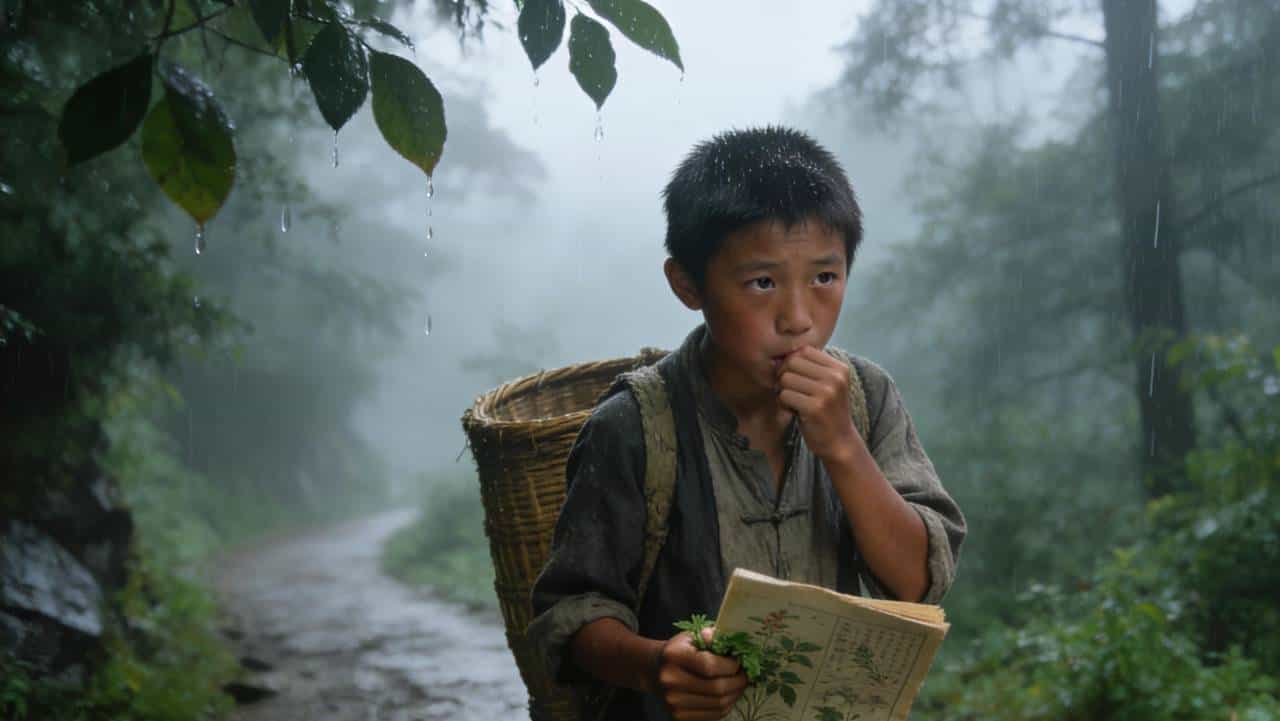
雨势稍歇,他便背着湿漉漉的柴捆下山。当晚,寒热便如同潜行的山蛇,悄不过至。先是骨头缝里渗出的酸痛,接着额头发烫,喉咙干痛,鼻塞声重。母亲摸了摸他的额头,忧心忡忡:“怕是着凉闭住汗了。去卫生所打一针?”
陈远摇摇头。他知道家里钱紧,弟弟的奶粉尚且要省着,几毛钱的药费,能省则省。况且,他心里有个隐约的念头,像雨后的菌子般冒出来——他想试试外婆教他的法子。
外婆是村里最后的“草药婆婆”,认得山里许多花花草草的脾性。陈远小时候常跟在外婆身后,看她用粗糙的手指捻起一片叶子,放在鼻尖闻闻,或用牙轻轻咬一下,便能说出它的名目和用处。那些知识,像山歌的调子,零零碎碎地印在了他脑海里。
“外婆说过,淋了山雨,寒气入体,得用‘开门方’,把汗发出来,把邪气赶走。” 陈远对母亲说,“我去找点草药。”
母亲看着他烧得发红却异常坚定的脸,叹了口气:“你认得全吗?别吃错了。”
“我认得。”陈远声音有些沙哑,但眼神清亮。他记得外婆拄着拐棍,指着田埂边说过的那些话。
第二天一早,尽管头重脚轻,陈远还是拎起一个小竹篮,揣上外婆留下的那把小药锄,出了门。雨后的山野,空气清冽,万物润泽。
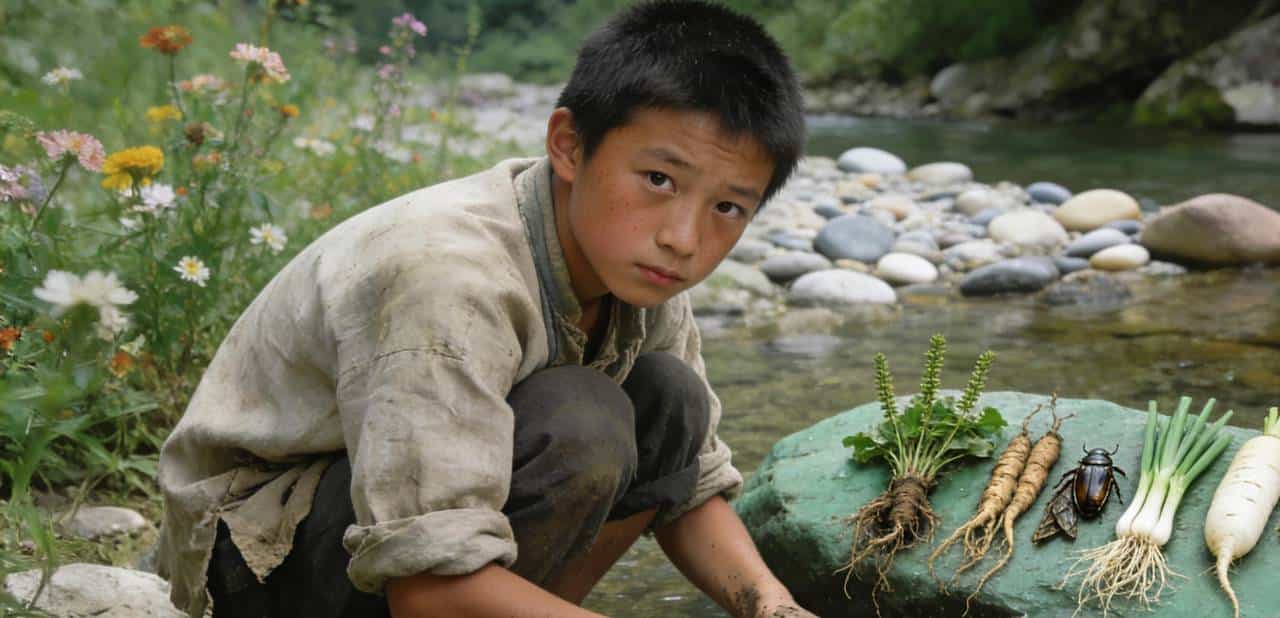
他先来到溪边湿润的沙土旁,寻找“独根车前草”。这种车前草与常见的丛生不同,往往单独一株,根茎粗壮,直直扎入深处。外婆说它的根效力更专,能通利水道,驱赶体内的湿气。陈远仔细辨认,找到几株,小心地连根挖出,抖掉泥土,那主根果然肥硕,带着泥土的腥气和一丝清苦。
“材胡”,他记得是长在山坡向阳处的,叶子细碎,开小黄花,根茎有特殊的香气。他在一处碎石坡找到了它,挖出那褐色的、虬结的根块,果然闻到一股辛凉之气。外婆说它能疏解表邪,让闭住的毛孔打开。
“知了皮”则是在老柳树的树干上寻到的,那些金褐色、半透明的蝉蜕,空荡荡地挂在树皮上,轻脆易碎。他小心地取下几个完整的。外婆说这东西轻扬,能散风热,利咽喉,像是给身体里闷住的热气开一扇天窗。
“大茐的根须”指的是野葱的老根。他在田垄边挖了一小把,那些盘结的白色根须带着浓郁的辛味。外婆用它来“通阳”,助发汗。
最后是“康康干白萝卜”,这是去年秋天家里晒的萝卜干,本就放在屋檐下。外婆说萝卜能下气、消食,兼能化痰,让药力运行得更顺畅。
他将这些零零碎碎的东西在溪水里仔细洗净。车前草根上的须根,材胡上的泥土,知了皮的微尘,野葱根须里的沙粒,还有萝卜干上的浮灰,都在清冽的溪流中被一一涤去。洗净的草药带着水珠,躺在竹篮里,散发出混杂着土腥、辛香、微苦的复杂气息,这气息,仿佛就是山野本身浓缩的精魂。
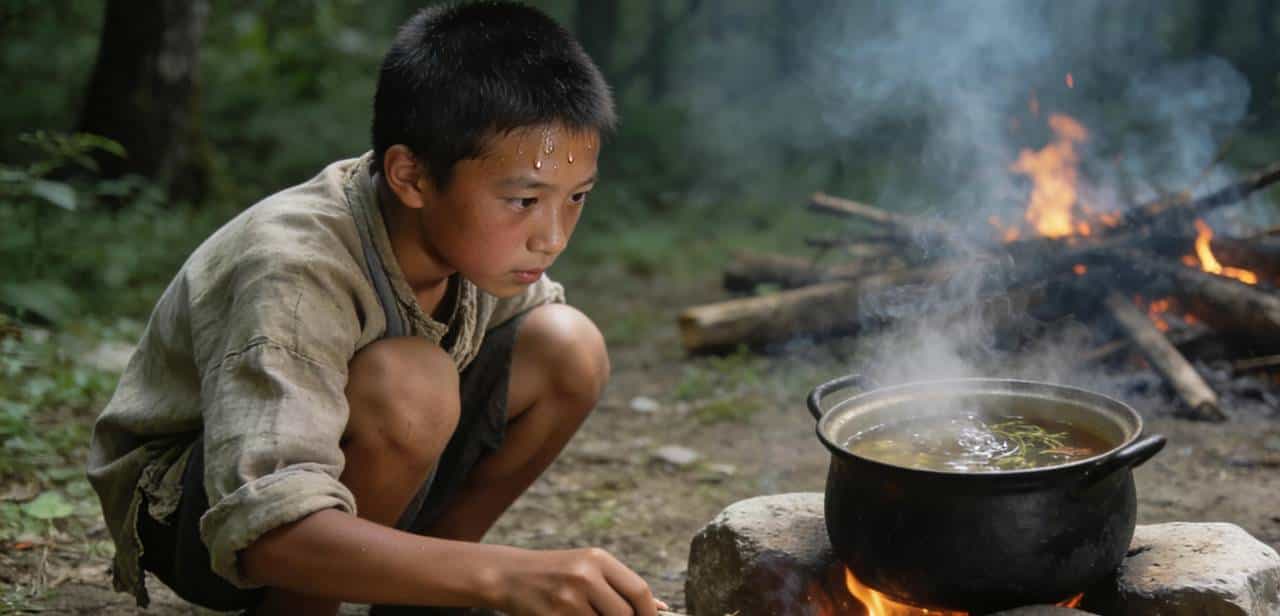
回到家,他没用家里的灶台。而是在后院背风的墙角,选了块平地,找来三块大小相仿、顶部较为平坦的青石,摆成一个稳固的三角形。这是外婆教的方法:“三石为灶,聚天地人三才之气,熬治山野之疾,最是相合。” 听起来有些玄乎,但陈远喜爱这种仪式感,仿佛这样,药力便能与这山林的气息更好地交融。
他将那只小小的、陶土烧制的砂锅——也是外婆留下的——稳稳架在三石之上。锅内注入清冽的井水,然后将洗净的药材逐一放入。材胡和车前草根沉底,知了皮和萝卜干漂浮,野葱根须散落其间。
点燃从柴捆里挑出的、干燥的松枝,橘红色的火苗舔舐着砂锅黝黑的底部。起初是“大火烧开”。松脂燃烧发出轻微的噼啪声,火光明亮而跃动,锅内的水很快发出嘶嘶的响声,细小的气泡从锅底和药材的缝隙间不断冒出,汇聚,最后水面翻滚起来。药材在沸水中沉浮,颜色渐渐变深,清水开始染上一种黄褐的色泽,复杂的药味随着蒸汽升腾起来,不再是生草时的土腥,而是转化为一种浓郁的、略带苦意的辛香。
水沸后,他小心地抽掉几根柴,只留一点炭火和红热的余烬。“小火慢熬”。火势减弱了,只剩下温吞的热力持续地烘着锅底。锅内的沸腾变成了舒缓的、持续的咕嘟声,药汤的颜色越来越浓,越来越醇,像是将山石的精华、草木的魂魄都慢慢熬煮了出来。蒸汽袅袅,带着药香,弥漫在墙角,钻进他的鼻息。他蹲在“三石灶”旁,看着那微火,听着那咕嘟声,感受着自己身体内部的寒热交战,心里竟奇异地平静下来。这不再只是治病,更像是一场他与这座山、与外婆的记忆、与自身疾病之间沉默的对话。
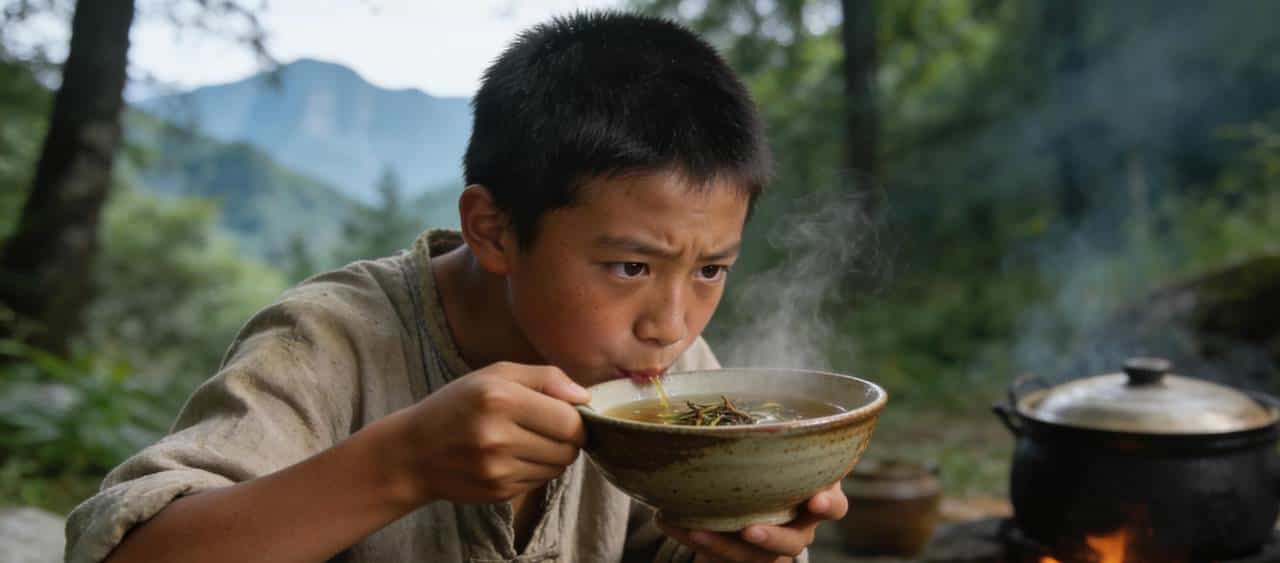
熬了约莫半个时辰,药汤收至浅浅一碗,色泽深浓如琥珀。他垫着布将滚烫的砂锅端下,待稍凉,便将那碗浓稠的、气味强烈的药汤,一口一口,忍着苦涩喝了下去。药汤入腹,一股暖意从小腹缓缓升起,渐渐扩散到四肢百骸。额头上、背心上,细细的汗珠开始沁出,先是凉的,随后变得温热。那种被寒气紧紧束缚住的感觉,仿佛随着汗液的排出,一点点松动了。
他裹着旧棉袄,坐在后院的小凳上,任汗出透。身体虽然虚弱,但头脑却异常清明。他看着那三块被火熏黑的石头,看着砂锅里残留的药渣,闻着空气中久久不散的药香。小学毕业了,他以为自己和童年那些依赖与懵懂也告别了。而此刻,在这自己亲手搭建的“三石灶”前,用从土地里亲手采集的草木治疗自己,他忽然意识到,另一种更深刻、更接地气的“毕业”刚刚完成。他不再仅仅是被山野滋养的孩子,他开始懂得如何与山野对话,如何从它那里获取疗愈与力量。这碗自采自熬的草药,其意义,或许不亚于他即将迈进的那所崭新的“谢湾中学”。前者教会他与脚下的土地共处,后者则将引领他望向山外的天空。
汗出透了,热度退去,喉咙的肿痛也缓解了大半。母亲端来一碗热粥,看着他恢复清明的眼睛,终于松了口气,眼神里充满了复杂的欣慰。
陈远喝下热粥,身体暖洋洋的。他望向远处在暮色中渐次亮起灯火的新学校方向,又看看墙角那三块沉默的石头和已然冷却的砂锅。山雨带来的寒意已被驱散,而某种更加内在的、关于成长与自立的热力,正如同那慢火熬出的药效,在他年轻的躯体里,扎实地沉淀下来。
Mountain Rain and the Scent of Medicine: A Tripod of Stones
The rain in the Qinling Mountains arrived without warning. One moment, the sun beat down fiercely; the next, dark clouds boiled up from the mountain folds, bringing rolling thunder and pea-sized drops that pelted down relentlessly. Chen Yuan, caught halfway up the slope gathering firewood, only had time to drag a few bundles of wet branches under an overhanging ledge. He himself was soaked through. Icy rainwater streamed from his hair, down his neck, and into his thin clothes, making him shudder. Pressed against the rock, watching the white curtain of rain and the instantly blurred village below, his mind worried over the few prep books for middle school, carefully wrapped in oilpaper, that he had borrowed from Old Master Li and which were in his basket.
When the rain slackened, he shouldered the damp bundles home. That night, the chills and fever arrived like a mountain snake on the prowl—first an ache seeping from his bones, then a burning forehead, a dry, sore throat, and a stuffy nose. His mother felt his forehead, worried. “Caught a chill, sweat trapped inside. Should we go to the clinic for an injection?”
Chen Yuan shook his head. He knew money was tight at home; his brother's formula was already a careful expense. A few mao for medicine could be saved. Besides, a vague idea had sprouted in his mind like mushrooms after rain—he wanted to try the method his grandmother had taught him.
His grandmother had been the village's last “herb-woman,” knowing the temperaments of many mountain plants. As a child, Chen Yuan had often trailed behind her, watching her rough fingers pick a leaf, smell it, or give it a slight bite, then name its use. That knowledge, like the tunes of mountain songs, had been imprinted piecemeal in his memory.
“Grandma said, when mountain rain chills get into your body, you need an 'opening formula' to draw the sweat out, to drive the evil qi away,” Chen Yuan told his mother. “I'll go find some herbs.”
His mother looked at his fever-flushed but determined face and sighed. “Do you remember them all? Don't take the wrong ones.”
“I remember,”Chen Yuan said, his voice hoarse but his eyes clear. He remembered his grandmother, leaning on her cane, pointing by the field ridges, telling him those things.
The next morning, though his head felt heavy and his steps unsteady, Chen Yuan took a small bamboo basket and the little digging hoe his grandmother had left him, and went out. The mountain wilds after rain were sharp with clean air, everything moist and vibrant.
He first went to the damp sandy soil by the creek, looking for “single-root plantain.” This plantain was different from the common clumping kind, often growing alone with a thick, deep taproot. Grandma said its root was more potent, could clear water passages and drive dampness from the body. Chen Yuan searched carefully, found a few plants, and dug them up, shaking off the soil. The main root was indeed stout, carrying an earthy scent and a hint of bitterness.
“Chaihu” (柴胡), he remembered, grew on sunny slopes, with finely divided leaves and small yellow flowers, its rootstock having a distinctive aroma. He found it on a gravelly slope, dug up the brown, gnarled root, and caught its pungent, cool smell. Grandma said it could release exterior pathogens, open the trapped pores.
“Cicada molts” he found on the trunk of an old willow—those golden-brown, translucent shells, empty and clinging to the bark, brittle and light. He carefully picked a few intact ones. Grandma said this thing was light and uplifting, could disperse wind-heat, soothe the throat—like opening a skylight for the pent-up heat inside the body.
“Old wild onion roots” meant the aged roots of wild chives. He dug a small handful from the edge of a field ridge; the tangled white roots carried a strong pungency. Grandma used them to “activate yang” and promote sweating.
Finally, “dried white radish”—this was radish dried last autumn, already hanging under the eaves at home. Grandma said radish could direct qi downward, aid digestion, and also resolve phlegm, helping the medicine's force move smoothly.
He carefully washed these assorted items in the creek water. The fine root hairs of the plantain, the dirt on the chaihu, the dust on the cicada molts, the sand in the wild onion roots, the surface dust on the dried radish—all were washed away in the clear, cold stream. The cleaned herbs, beaded with water, lay in the bamboo basket, emitting a complex fragrance of earth, pungency, and mild bitterness—a scent that seemed the condensed spirit of the mountain wilds itself.
Back home, he didn't use the family stove. Instead, in a sheltered corner of the backyard, he chose a flat spot and found three bluish stones of similar size with relatively flat tops, arranging them into a stable triangle. This was Grandma's method: “A tripod of stones gathers the qi of heaven, earth, and man. For simmering medicine for mountain ills, it's most fitting.” It sounded somewhat mystical, but Chen Yuan liked the ritual. It felt as if, this way, the medicine's power could better blend with the breath of these mountains and forests.
He set the small, clay-fired sandpot—also left by his grandmother—firmly atop the three stones. Into the pot, he poured clear well water, then placed the washed herbs one by one. The chaihu and plantain root sank; the cicada molts and dried radish floated; the wild onion roots scattered among them.
He lit some dry pine twigs picked from the firewood bundle. Orange flames licked the sandpot's black bottom. First, “bring to a boil over high heat.” The pine resin crackled softly, the fire bright and dancing. The water in the pot soon hissed, tiny bubbles rising from the bottom and between the herbs, gathering, until the surface roiled. The herbs bobbed in the boiling water, their colors deepening, the clear water taking on a yellowish-brown hue. The complex medicinal scent rose with the steam, no longer the raw earthiness of the plants, but transformed into a rich, pungent aroma with a bitter edge.
Once boiling, he carefully removed a few sticks, leaving only embers and glowing coals. “Then simmer over low heat.” The fire diminished to a gentle warmth steadily heating the pot. The violent boil softened to a steady, soothing simmer. The broth grew darker, richer, as if slowly extracting the essence of stone and the soul of plants. Steam curled up, carrying the medicinal fragrance, filling the corner, drifting into his nostrils. Squatting by the “tripod stove,” watching the low flame, listening to the simmer, feeling the battle of chills and fever within his own body, his mind grew strangely calm. This was no longer just treating an illness; it felt more like a silent dialogue between him and this mountain, his grandmother's memory, and his own sickness.
After simmering for about half an hour, the broth had reduced to a shallow bowlful, deep and rich like amber. Using a cloth, he lifted the scalding pot from the stones. When it had cooled slightly, he drank the thick, potent-tasting decoction, sip by bitter sip. As it reached his stomach, a warmth slowly rose from his lower abdomen, gradually spreading to his limbs. Fine beads of sweat appeared on his forehead and back—cool at first, then turning warm. The feeling of being tightly bound by cold seemed to loosen bit by bit as the sweat was released.
Wrapped in an old padded jacket, he sat on a small stool in the backyard, letting the sweat pour out. His body felt weak, but his mind was unusually clear. He looked at the three stones blackened by fire, at the dregs left in the sandpot, breathing in the medicinal scent lingering in the air. Primary school was over; he thought he had also bid farewell to the dependence and naivety of childhood. Yet here, before this “tripod stove” he had built with his own hands, using plants he had gathered from the earth to heal himself, he suddenly realized another, deeper, more grounded kind of “graduation” had just been completed. He was no longer just a child nurtured by the mountain wilds. He was beginning to understand how to converse with them, how to draw healing and strength from them. The significance of this bowl of self-gathered, self-brewed herbal medicine was perhaps no less than that of the new “Xie Wan Middle School” he was about to enter. The former taught him how to coexist with the land beneath his feet; the latter would lead him to gaze at the sky beyond the mountains.
The sweat poured out, the fever broke, the swollen pain in his throat eased greatly. His mother brought him a bowl of hot porridge. Seeing the clarity returning to his eyes, she finally relaxed, her gaze filled with a complex blend of relief and pride.
Chen Yuan drank the warm porridge, his body cozy. He looked towards the new school, where lights were beginning to twinkle in the gathering dusk, then back at the three silent stones and the now-cool sandpot in the corner. The chill brought by the mountain rain had been dispelled. And a more intrinsic warmth, about growth and self-reliance, was settling solidly within his young body, like the slowly simmered efficacy of the medicine itself.
© 版权声明
文章版权归作者所有,未经允许请勿转载。
相关文章

![git push 提示 ! [rejected] dev -> dev (non-fast-forward)](https://www.dunling.com/img/2.jpg)


暂无评论...